Morgan Washington · 27 October 2026
Poland's Education Review Highlights Student Projects Filling Environmental Data Voids
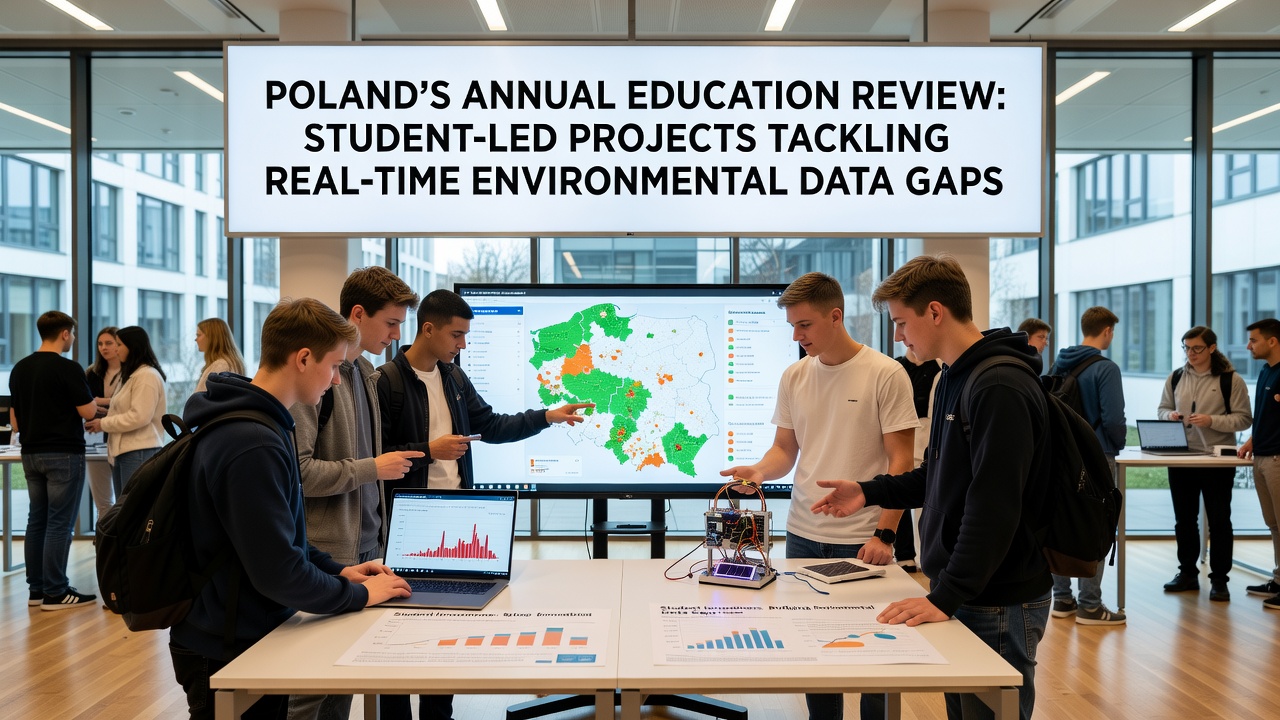
Poland's annual education review took center stage in October 2026 with fresh attention on student-led initiatives that target gaps in real-time environmental data collection across the country. The review assembled educators, researchers, and regional officials to examine how secondary and university programs integrate practical fieldwork with emerging technologies to monitor variables like air quality, river flows, and soil conditions. Data shows these efforts address longstanding shortfalls where official monitoring stations leave rural and urban fringe areas underrepresented.
Scope of the Annual Review
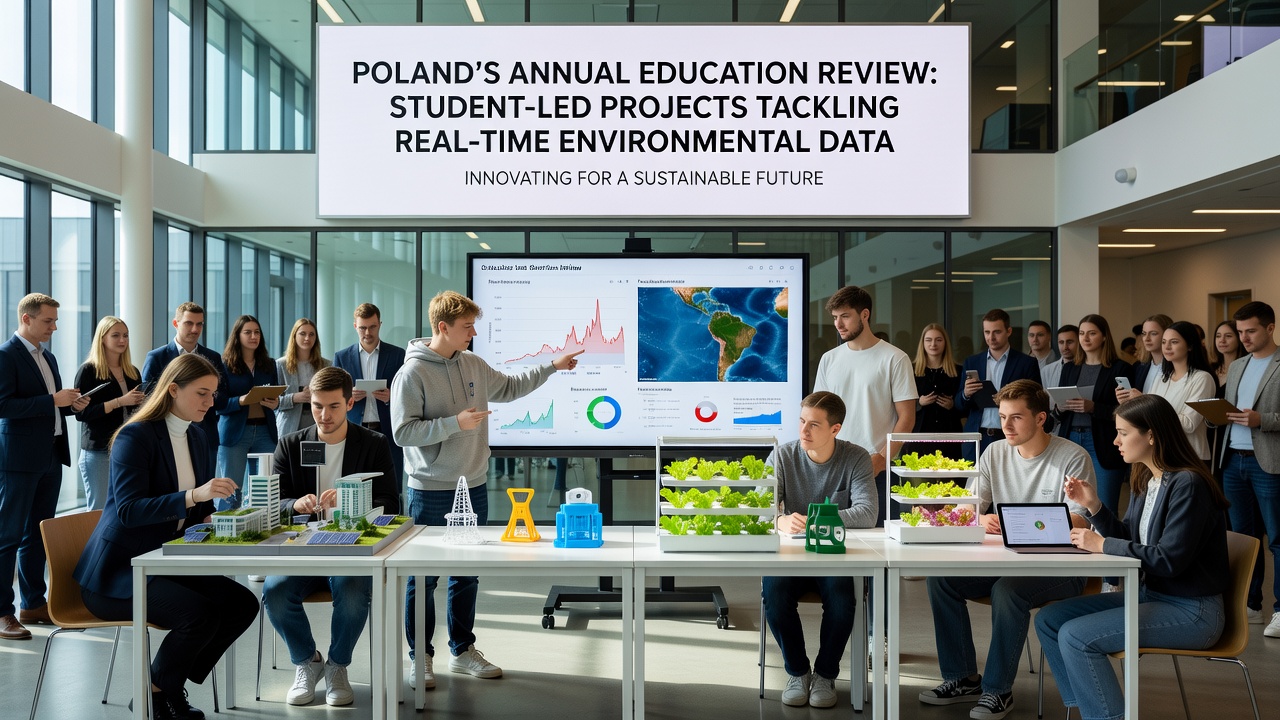
Organizers structured the event around presentations from over 40 student teams who developed prototypes for continuous data streams that supplement national networks operated by the Polish Institute of Meteorology and Water Management. One project tracked particulate matter levels in industrial zones near Katowice using portable sensors linked to cloud platforms, while another focused on wetland restoration sites in the Biebrza region where water level fluctuations had previously gone unrecorded during seasonal peaks. Researchers discovered these student deployments filled intervals that static government sensors often miss due to maintenance cycles and geographic spacing.
Student Projects in Action
Teams drew on partnerships with local municipalities to deploy low-cost IoT devices that transmit readings every fifteen minutes, creating datasets suitable for both academic analysis and policy input. A group from Warsaw University of Technology built an app that cross-references student-collected biodiversity counts with satellite imagery, revealing seasonal shifts in pollinator activity that align with temperature anomalies documented by the European Environment Agency. Observers note the review format encouraged live demonstrations rather than static reports, allowing participants to adjust collection protocols on the spot based on feedback from attending scientists.
Another initiative in the Lublin province concentrated on agricultural runoff into the Vistula tributaries, where students installed automated samplers that log nitrate concentrations alongside precipitation events. Figures reveal these localized readings captured spikes during heavy autumn rains that broader regional models had previously underestimated. The review also featured workshops on data validation methods, teaching participants how to calibrate student instruments against reference stations maintained by the Chief Inspectorate of Environmental Protection.
Integration with Broader Networks
Education officials highlighted how these projects feed into larger European frameworks without duplicating existing infrastructure. Students in several programs now upload anonymized datasets to shared repositories coordinated through the EU's Copernicus program, expanding coverage for climate adaptation studies. A case from the review showed one team's air quality maps from Silesian schools contributing to a cross-border analysis that included inputs from Czech and German counterparts, illustrating how localized efforts scale when standardized formats are applied early. Those who've studied this know the review serves as a checkpoint where curriculum updates are proposed to embed data literacy modules into standard science tracks starting the following academic year.
Partnerships extended beyond classrooms to include equipment loans from private sensor manufacturers and guidance from hydrologists at the Polish Academy of Sciences. Review sessions examined success metrics such as data uptime rates above 92 percent for student-maintained stations and the number of peer-reviewed submissions generated from undergraduate fieldwork. Evidence suggests these metrics help justify continued funding allocations for school-based environmental labs in upcoming budget cycles.
Challenges Addressed and Future Steps
Participants discussed persistent hurdles including battery life in remote deployments and the need for consistent training across participating schools. Solutions presented ranged from solar-powered enclosures tested in the review's exhibition area to peer-mentoring networks that pair experienced student teams with newcomers. The reality is that real-time gaps persist in forested and mountainous terrain, yet the showcased projects demonstrate scalable approaches using open-source software that lowers entry barriers for additional regions. Review documentation indicates plans to expand the model to vocational schools focused on renewable energy installation, where trainees can simultaneously gather performance data on solar arrays exposed to variable weather patterns.
Conclusion
The October 2026 review underscored measurable progress in student contributions to environmental monitoring while identifying clear pathways for wider adoption. By connecting classroom projects to national and international data systems, these initiatives continue to narrow coverage shortfalls in ways that support both education goals and evidence-based decision making at multiple administrative levels.